
YES — Strings Attached
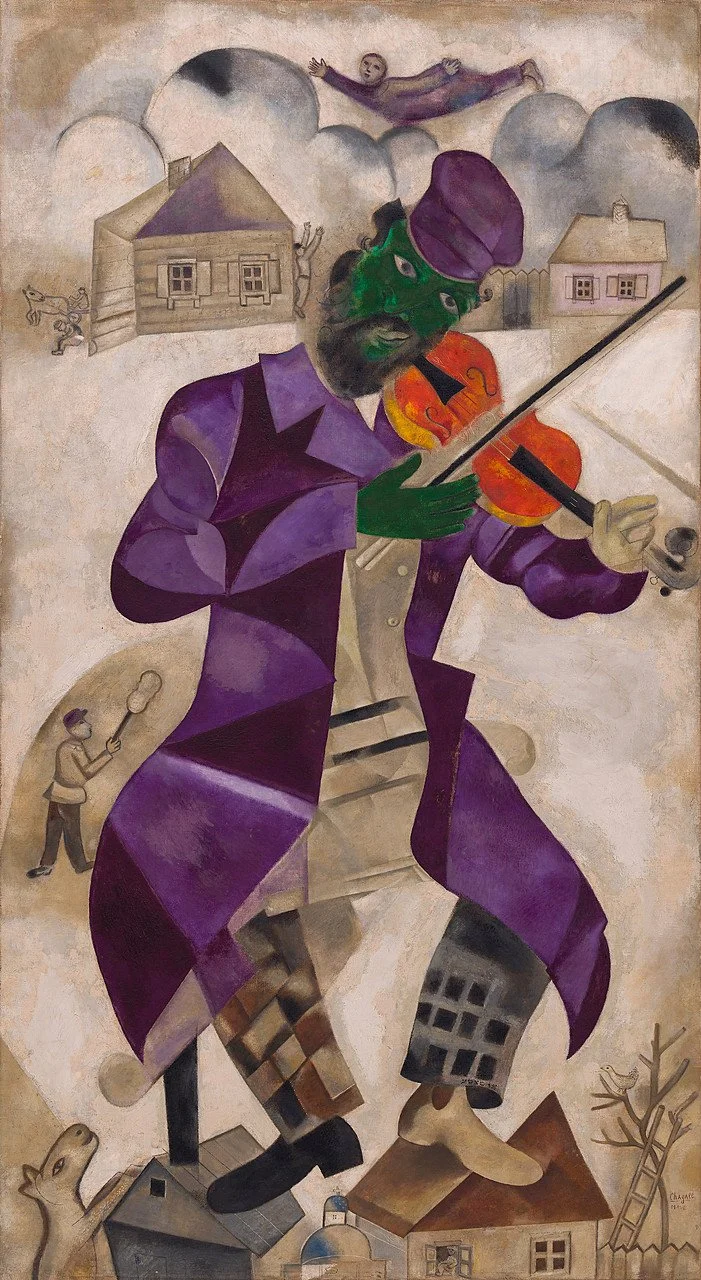
Marc Chagall, “The Green Violinist” (1923-1924).
Why a Strings Program Matters More Than Ever
May 2026 | by Ricardo Veiga
Inspired by the timeless musical imagery of Marc Chagall, whose paintings often celebrated the violin as a symbol of imagination, culture, memory, and the human spirit.
In today’s world, parents are searching for activities that do more than simply keep children busy. They are looking for experiences that help shape character, build confidence, develop intelligence, and nurture emotional well-being.
At Oklahoma Academy of Music & Fine Arts (OAMFA), we believe few disciplines accomplish this more beautifully than the study of string instruments.
So perhaps it is time to rethink the old expression “No Strings Attached.” Because when it comes to education, creativity, and human development, we believe the opposite is true:
Yes — Strings Attached.
The violin, viola, cello, and bass are not simply instruments. They are pathways toward discipline, imagination, collaboration, emotional expression, and lifelong learning.
“Music teaches children discipline and perseverance.” — Itzhak Perlman
String playing embodies these qualities at the highest level. Unlike many instruments, strings require students to constantly refine their listening. Every note demands awareness, patience, precision, and sensitivity. Students learn how to adjust, adapt, and improve in real time.
Over time, they develop not only musical ability, but focus, resilience, confidence, and emotional maturity.
Yet perhaps the greatest beauty of strings is their extraordinary versatility.The violin alone has traveled across centuries and cultures, serving both as a concert instrument and as the voice of communities around the world. It can be heard soaring through the great concert halls in the music of Tchaikovsky, singing through intimate chamber music, leading the fiery spirit of folk traditions, or bringing joy and energy to American bluegrass fiddle music.
From orchestra halls to front porches, from film scores to jazz ensembles, string instruments possess a rare ability to bridge sophistication and spontaneity, discipline and freedom.
This diversity allows students to discover many different musical identities while building a strong technical and artistic foundation.
“Music helps us imagine what another person is feeling.” — Yo-Yo Ma
That idea sits at the very heart of ensemble playing.
In an orchestra or chamber ensemble, students quickly discover that music is not about individual attention alone. It is about listening to others, contributing to a larger whole, and understanding how collaboration creates something far greater than any one person could achieve alone.
These are not simply musical lessons. They are life lessons.
Students learn teamwork, leadership, empathy, responsibility, communication, and emotional awareness.
In many ways, a string ensemble functions like a miniature society — teaching young people how to work together toward a common artistic goal.
Research continues to show that music study strengthens memory, cognitive flexibility, coordination, language development, and problem-solving abilities. But beyond academics, string study offers something even more meaningful: it gives children a voice.
For some students, the violin becomes a source of confidence. For others, the cello becomes a place of emotional expression and calm. For many, ensemble participation becomes the first place where they truly feel part of a community. A thriving string program also transforms the culture of a school itself.
Hallways become filled not only with practice, but with shared artistic experiences. Students begin to understand that music is not merely an extracurricular activity — it is a language, a discipline, and a way of connecting with others and with themselves.
At Oklahoma Academy of Music & Fine Arts (OAMFA), our vision has always extended beyond traditional lessons. At OAMFA, we strive to create an environment where creativity, collaboration, innovation, and human connection work together in meaningful ways.
A strong string program is an essential part of the OAMFA vision.
Through violin, viola, cello, and bass study, OAMFA students will learn far more than scales and repertoire. They learn how to listen deeply. How to think creatively. How to work together. How to express emotion. How to pursue excellence with patience, discipline, and purpose.
Because in the end, music education is not simply about creating musicians.
At OAMFA, it is about developing thoughtful, confident, emotionally intelligent human beings.
And for that journey, we believe there should absolutely be strings attached.
Currently, we offer both violin and viola group classes and lessons. If you are interested to learn more, please contact us: info@okfinearts.com or (405) 463-9205
